When the Doctor Becomes the Patient: The MedVA Story
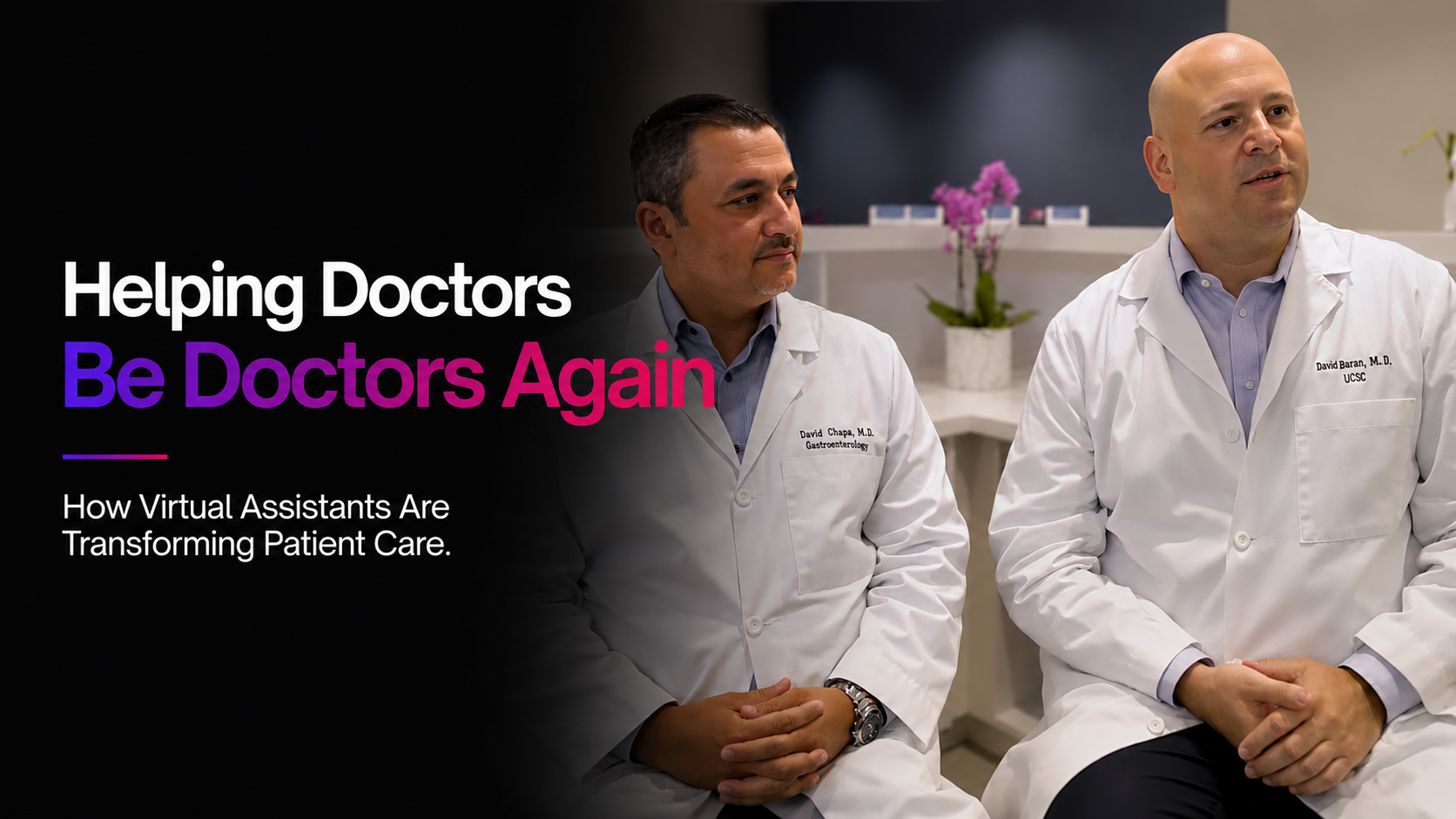
The Situation
Stephen Kupferman is a board-certified oral and maxillofacial surgeon. Omid Shaye is a board-certified gastroenterologist. Between them, decades of specialized training, licensing, and clinical expertise. They know how to diagnose. How to operate. How to manage a patient through the worst moments of their life.
Nobody taught them how to run an office.
But that's what the job had become. Managing staff. Chasing billing. Handling compliance. The administrative burden of a modern medical practice doesn't announce itself — it accumulates, quietly, until the day a physician realizes he's spent eight straight hours at work and hasn't seen a single patient.
That was the day MedVA started. Whether they knew it yet or not.
The Challenge
MedVA is a company built on a simple insight: most of what happens inside a medical office doesn't actually need to happen inside a medical office. Tasks that have always been done in-person can be done remotely — efficiently, reliably, and at a fraction of the cost.
That's a compelling business case. It's also, on its own, completely forgettable.
The real asset wasn't the product. It was the founders. Two practicing physicians who didn't stumble onto a market opportunity — they lived the problem, solved it in their own practices, and then built a company because they couldn't imagine leaving every other doctor in the same position they'd been in.
The challenge was making sure that came through. Not as a pitch. As a story.
What We Uncovered
When we sat down with Stephen and Omid, we kept pushing past the company narrative toward something more specific: What did it actually feel like before?
What came back was a portrait of a profession under quiet, relentless pressure. Staff stretched past their limits. Morale eroding in ways nobody named out loud. Doctors who had given years to a calling, now spending their days on tasks that had nothing to do with why they showed up in the first place.
The turning point wasn't strategy. It was a realization — almost accidental — that things could be different. That the tasks consuming their days could be handed to someone they'd never have to house, onboard the usual way, or pay at traditional rates. Once they saw it work in their own offices, the company wasn't a plan. It was an inevitability.
That's what the video needed to carry: not the features of the product, but the moment of recognition that launched it. Because that same moment is what every physician watching the video is waiting to have themselves.
The Result
MedVA launched as the first company dedicated to placing virtual assistants in healthcare practices. It grew quickly — into a thriving, multi-million-dollar business that continues to expand.
The founders' video didn't just introduce the company. It made the case from the inside. When a physician watches it, they don't see a product demo. They see themselves — six months ago, a year ago, the week they almost quit. That recognition is what moves someone from viewer to client.
One story. Sixty seconds. A company born.
The right founders' story doesn't explain why someone built something. It makes you feel why they had no other choice.

Rich Bornstein
Rich Bornstein founded Bornstein Media and created The Clarity Framework™, a methodology that helps B2B founders and executives uncover the insight their business is built on before they market it. A former journalist with leadership roles at Warner Bros. Television, Paramount Pictures, and The Samuel Goldwyn Company, he was a producer on Emmy-nominated work and is a Forbes Communications Council contributor.